Carl Sagan’s Sense of Wonder
This fictional interview below with Carl Sagan, one of the most open-minded cosmologists, provides a picture of the incredibly majestic universal macro- and micro-world and how humanity—with its anthropocentric view of the universe—relates to it. It also offers insight into principles that provide a deeper view of the connection between all manifestations and processes in the cosmos.
Carl Sagan developed the information sent into space in the form of golden plates, with the intention that potential extraterrestrial intelligences might receive and understand the messages. However, this information contains no reference whatsoever to the nature of the human mind or to spiritual wisdom (often centuries-old) originating everywhere in the world.
Carl Sagan passed away in 1996. Since then, an extensive field of research has emerged worldwide regarding consciousness and non-local (quantum) interconnectedness. This has since yielded an impressive body of evidence regarding the existence of an all-encompassing and all-connecting causal Field, which in Vedic philosophy is called the Akashic Field.
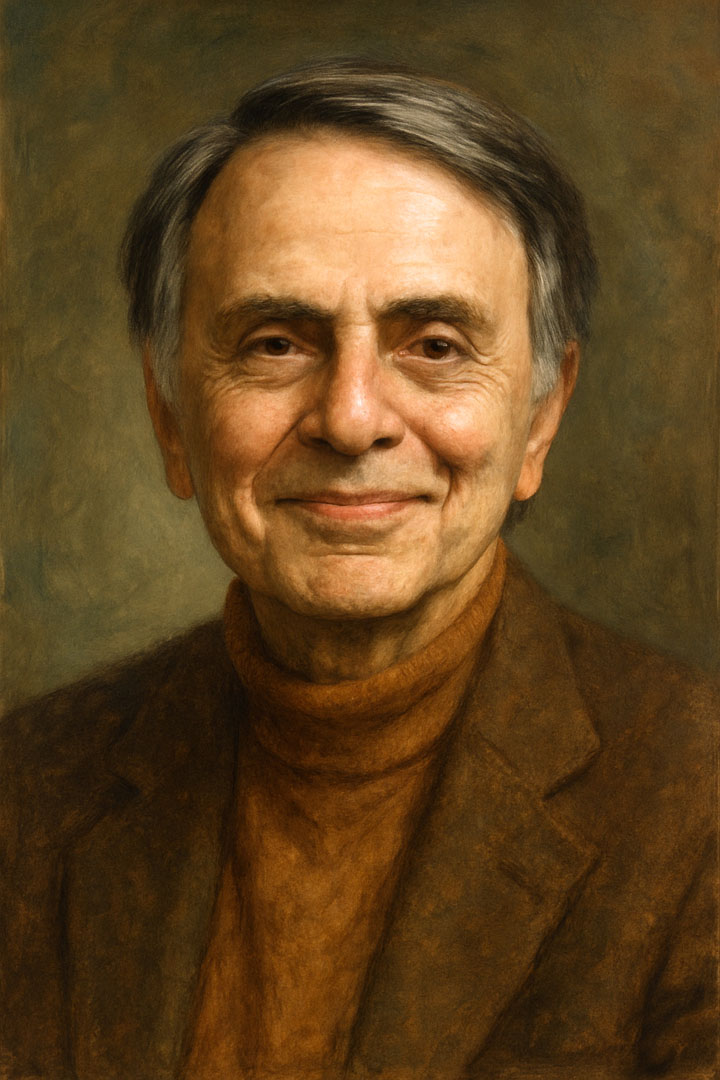
Interview with Carl Sagan
.
Good day, Mr Sagan. How wonderful that I may interview you! I once watched some of your presentations on television, and I remember how clearly and accessibly you were able to speak about even the most difficult subjects.
Yes, that was in the 1980s… my series ‘Cosmos’. It was widely watched. And just call me Carl, because here in the afterlife every hierarchy disappears.
Ah, thank you… Yes, it was a magnificent series. You took us on a journey through the stars, the Earth and the universe, and I was completely captivated by it.
That was precisely the intention! I myself felt a profound sense of wonder at the universe and an almost mystical appreciation for everything I discovered.
That is precisely why I would like to speak with you, because I am involved with spirituality. I wonder whether this was a spiritual experience for you, and if so, whether you would like to tell me something about it.
Well, you should know that I was quite critical of various forms of religion, especially when they are dogmatic and rigid. Over the past 2,000 years, religions have very often stood in opposition to science and persecuted serious and dedicated colleagues of mine from earlier times. I still find it horrifying that this resulted in so much suppression of knowledge.
Naturally… I too feel more affinity with spiritual traditions that are actually open to scientific knowledge. Traditions that have produced spiritually inspired seekers of truth. Very different from the religions you are referring to.
Okay, I understand that. For me, spirituality was therefore not bound to a religious belief or system, but to an awareness of a deeper connection with the whole… a sense of unity with the cosmos arising from knowledge and wonder. I do not see much in religious belief, but I do experience a kind of spiritual feeling when I contemplate the universe and our place within it as human beings. I could be delighted and even astonished with awe when studying the universe… that immense vastness… but also the complexity of life on our planet. When you see how incomprehensibly vast both the macro- and microworlds are… even now I still cannot get my head around it, although I am no longer in a physical world… I am speaking of a cosmic perspective that helps us put things into perspective and remain humble, and that brings with it a profound sense of responsibility.
Ah… I recognise that… for me, a spiritual person is therefore someone who, on the one hand, carries a deep sense of responsibility within themselves, and on the other hand knows that the cosmos is what it is… and that human beings have hardly any influence upon it, however responsibly or irresponsibly they may behave.
Yes, I see it that way too, because the cosmos is untouchable. No good deed or crime will be able to influence it. The universe accessible to our knowledge is therefore completely neutral and does not interfere with anything. Everything simply goes its own way.
And that is therefore in contrast to dogmatic religions, because there is always that god who governs and punishes or rewards… I truly cannot understand how intelligent people can believe so steadfastly in this throughout their entire lives.
Well, apparently it provides a kind of false certainty… people want something to hold on to, somewhere to belong… a community… shared principles that can be understood together… But yes, that is precisely what is impossible on a cosmic scale. It simply cannot be comprehended!
For me, therefore, evidence and rational thinking must always come first in research and in the construction of grand syntheses and paradigms. There is quite a lot to discover that can be demonstrated and that reveals the enormous scale of cosmic phenomena. If people wish to call that divine… fine.
Yes, I am impressed by that too… Sometimes I investigate certain things using AI, because by now it is the best encyclopaedia there is. And I assume that you have made a major contribution to that. Everything you discovered and described can be found in it.
Well, that is nice to hear! Tell me, what did you want to know, for example?
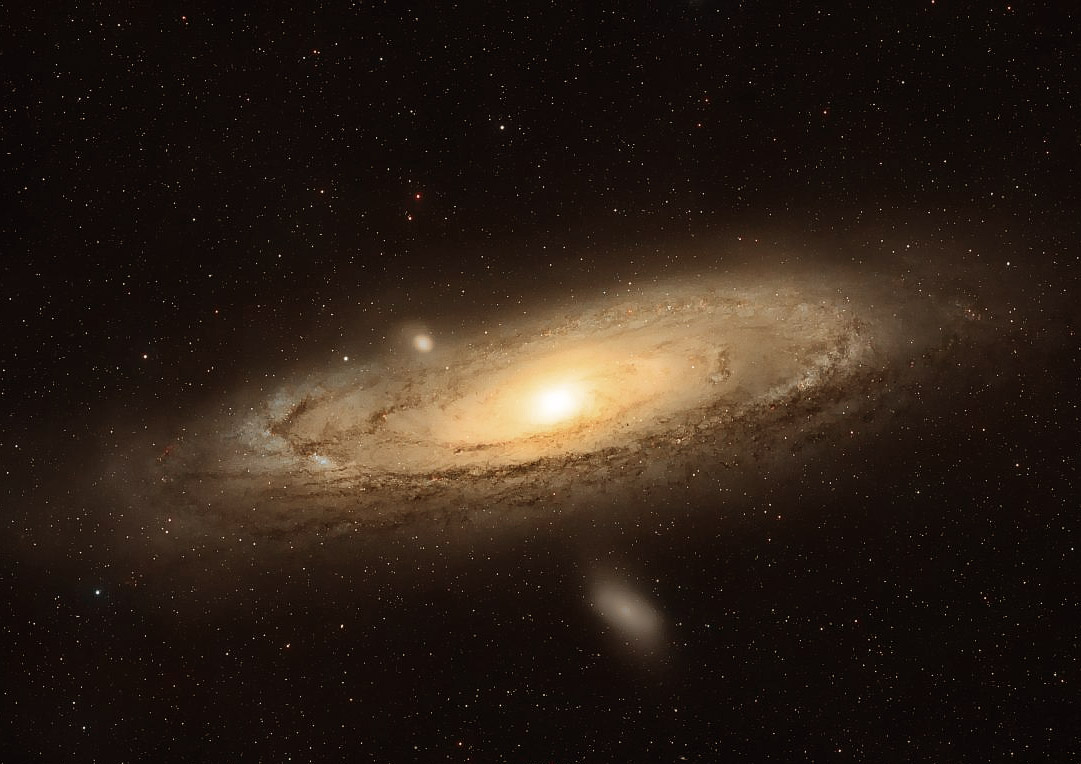 I once searched for Andromeda in the night sky, the nearest galaxy. On a very clear night, it can be seen with the naked eye. It took me a while, but I found a star map to help me find Andromeda, with arrows showing me where to look. And with my little 8×20 binoculars, I found it!
Just a tiny smudge… or a little ‘cloud’… very different from a single star. Then I could see it with the naked eye too… not easy, because it really has to be very dark.
Well done! It is indeed reasonably easy to find beneath the W of the constellation Cassiopeia. The Andromeda Galaxy lies about 2.5 million light-years away from us, a magnificent beacon of light from the past, because the light we see from it now was emitted before human beings even existed! By the time Homo sapiens emerged, the combined light from all the stars in Andromeda had already been ‘travelling’ towards our Earth for more than two million years at about 300,000 kilometres per second! That realisation alone shows how vast and distant Andromeda is from us, and how small and young we are on a cosmic scale. Our human existence is therefore only a tiny chapter in a story stretching across billions of years.
And yet human beings possess the ability to understand this grandeur, or at least to sense it. Although… do human beings really possess that ability?
Yes, that is one of the most astonishing characteristics of our species. This ability, a product of long evolutionary processes, to contemplate galaxies… timescales that far exceed our imagination. And also the molecular complexity of life itself. Here we must remain very modest: our minds work with symbols and models, and these are always limited. They are not reality itself.
I wrote about that… about anthropocentrism… about that small-minded human way of thinking… which is very limited, and cannot be anything else… about how this creates a barrier and how we fail to realise that it stands in the way of the search for truth.
You have seen that clearly. The human mind definitely has its limits.
But that is precisely why spiritual awakening is important to me, because it not only helps prevent anthropocentrism, but also makes us more receptive to understanding that cannot be gained through analysis or measurement. It seems to me that one cannot escape the conclusion that some form of absolute consciousness underlies every form of existence… even every process and every change… an immense intelligence, you might also say.
I understand what you mean. I can acknowledge that an immense intelligence behind the observable universe can be sensed. Yet I have difficulty with the creationist premise… as though there were a ‘creator’. Bear in mind that the limited human mind is nevertheless extremely creative when it comes to devising all kinds of beautiful or even lofty theories that cannot be substantiated by facts. There is a great deal of fantasising… which is then even presented as scientific, when it cannot be. For example, the idea that a ‘god’ exists. Many people then adopt such an idea, and before you know it you have an entire movement based on imaginings. In fact, that is far worse than merely basing yourself on models.
I agree with you. I am therefore not speaking of a creator either. Yet ‘god’ is merely one form or name chosen for that immeasurable intelligence behind everything. That is because human beings actually have too little imagination to understand and sense the underlying grandeur without attaching crude human images to it. Great Italian painters depicted God as a ‘bearded man on a cloud’… That is actually rather sad, isn’t it? We should not create images of the Absolute, should we…? Wasn’t that one of the Ten Commandments?
Precisely, that is true. And we should not do it! It is difficult, I know; human beings want images and explanations… Without that tendency to reduce everything to human proportions, the incredibly intelligent universal coherence of forms and processes becomes far more awe-inspiring. Far more mysterious. Far more challenging too. Simply admit that human beings do not possess such a universal mind that they will ever be able to comprehend everything. We must not make the Absolute, as you call it, smaller for our own peace of mind. In that sense, I reject every god in heaven.
Well… I can understand that very well. You often spoke about the “pale blue dot”, our Earth as a tiny blue-coloured point in the immense universe. Can that idea help cultivate human humility? Help us understand our true proportions?
Certainly. Just as those billions of galaxies far beyond Andromeda humble us through our awareness of their distances and age, the ‘pale blue dot’ helps remind us that all people, all our conflicts, all our loves and dreams take place on a tiny blue speck in an immense dark cosmos. And we have not even begun to speak about the minute scale of life within ourselves… a universe within us. That too is an immense dark cosmos, but in the opposite direction.
Indeed, I had looked something up about that as well. I wanted to know more about human body cells… their physical properties, and those of our DNA. Then I discovered that every human being has about 37 trillion cells in their body… 37 trillion! And every cell is again filled with proteins, lipids and molecules, such as DNA… I simply cannot get my head around it.
It is not strange at all that you cannot get your head around it. Nobody can. These are magnitudes – or should I now say smallitudes – of such a scale… God-like, you might say, if you are religious, haha.
Yes… and then there is also the realisation that a single human cell out of those 37 trillion contains about six and a half billion DNA nucleotides… in those double-helix strands whose image everyone recognises nowadays.
Beautiful, isn’t it? Beautiful and awe-inspiring! Just as awe-inspiring as the fact that there are some two trillion galaxies, each containing several hundred billion stars… Now I have a nice question for you: Do you know how long a single strand of DNA in one of your body cells would be if you were to unfold it?
No idea…
If you were to uncoil the DNA from a single cell, it would be about 2 metres long.
Two metres??? And then multiplied by 37 trillion??? Because that’s how many cells we have!
Yes! Hard to believe, isn’t it? If all the DNA in your body were uncoiled, it could span a distance of approximately 74 billion kilometres. That is more than 500 times the distance between the Earth and the Sun!
Wow… you’re not pulling my leg, are you?
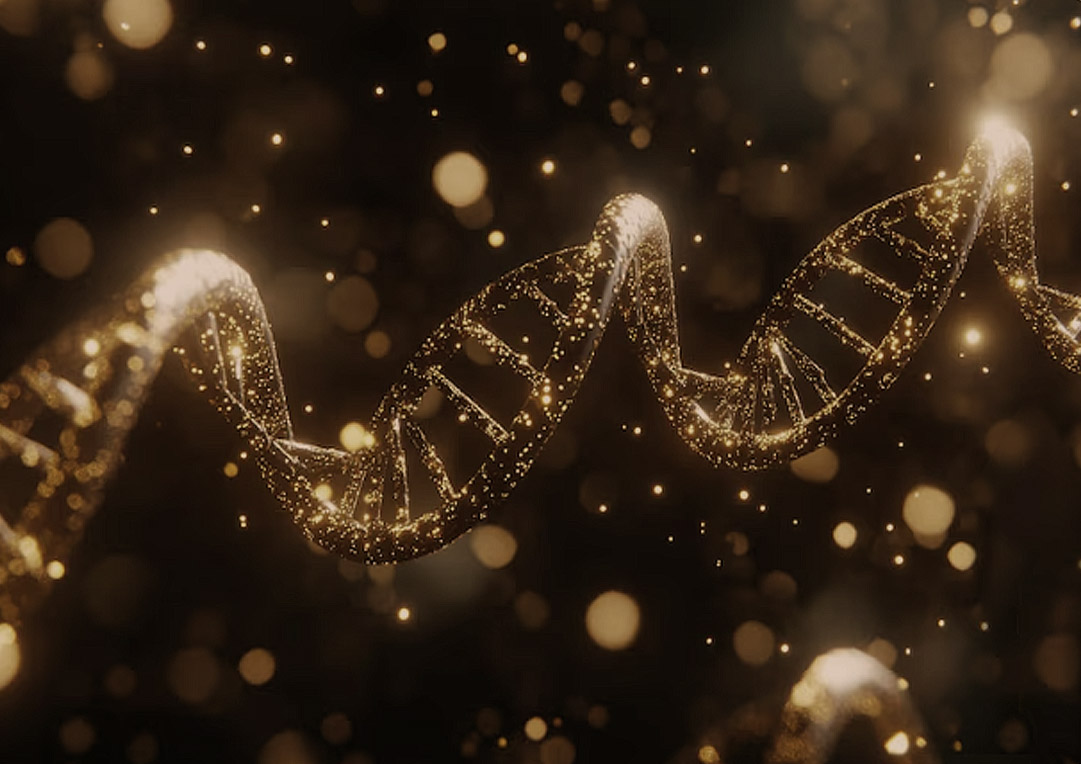 Absolutely not! This is a wonderful example of the paradox of scale. On the one hand, we are merely a dot on a blue dot in the universe; on the other hand, within ourselves we carry an astonishing, vast structure of information and complexity that we still do not understand at all. The molecules in our cells are fragments of an incomprehensible story about the origin and continued existence of life. On an indescribable scale.
So you are saying that scale and time are of a magnitude that can never, ever be comprehended?
Yes, because we ourselves exist only briefly, for an average of about 85 years… but the atoms that make up our DNA – such as carbon, oxygen, hydrogen, nitrogen and phosphorus – continue to exist for millions to billions of years. So they are not ‘ours’. We are made of stardust! All the elements in our bodies originate from the life and death of stars. It could not be otherwise. All atoms and their elements are ‘recycled’ on a cosmic scale. I sometimes joked: “if you wish to make an apple pie from scratch, you must first invent the universe”. Realising all these things gave me a profound sense of connection and respect for life. Because you know… the miracle of life has never yet been explained. Not by science, nor by any religion or philosophy.
Yes, Maurice Nicoll also said that, a Fourth Way teacher from whom I have learned a great deal. He was a psychiatrist and a spiritual-philosophical teacher. Among others, he worked together with Carl Gustav Jung. He said: “Man attributes spirit, thought, consciousness, feeling, willing, life – in a word, everything – to himself, although he is unable, and never will be able, to explain even one of these things.”
What does this tell us about the limitations of human knowledge?
I certainly knew Carl Jung. I shared his fascination with the human tendency to perceive patterns and create myths. I also admired the human search for meaning… that theme was quite central to Jung. But… I was not particularly fond of the Fourth Way. Look… I understand perfectly well that the Fourth Way is about self-development, awakening and psychological transformation. But because this system rests on assumptions that elude objective scientific testing, as far as I am concerned it belongs to the realm of human narrative. That is why I devised the Baloney Detection Kit – a tool for detecting nonsense – as a necessary instrument for preventing ourselves from being misled by beautiful stories.
I understand. A bullshit detector… Important. Yet I am a supporter of the Fourth Way system, because – alongside certainly some ‘baloney’ – it studies the human mind, and every person can discover those principles within themselves. To see whether they are true. In my view, that too is a form of testing or evidence. If I can observe within myself that for most of the day I am not self-reflective in the present moment of Now, and therefore not in a felt awareness of myself within situations, then the proposition that human beings spend most of their lives in a state of ‘waking sleep’ suddenly becomes a fact. And the same applies to the discovery that there are centres and instruments within our minds that provide it with a useful mind map, making us much clearer and more accurate. Do you see that?
Yes, I can understand that. Certainly… thinking in terms of billions of years and astronomical distances, alongside the incredible complexity within a single cell, challenges us to expand our consciousness. And that expansion is not only intellectual and intuitive, but in a certain sense spiritual as well… it helps us find our place within the greater whole, with respect and wonder.
But I remain critical when something is unscientific… although it may serve to connect people and provide meaning. My own ‘spirituality’ was rooted in science, in the search for truth and in the joy of discovery. ‘The great mystery’ is that science knows more and more, but also increasingly realises how much remains unknown and may perhaps never be known. For me, that is an essential part of the experience, without this having to mean that I would need to resort to the supernatural.
Well… I do not regard the human mind… my own mind and my investigation into it, that is… as supernatural. We cannot deny that our human mind, with all its extraordinary qualities, is entirely natural, despite the fact that so little of it can be explained or proven scientifically. Just try to prove where consciousness resides within us as individuals… in our brain? In our heart? It cannot be found. I regard investigating our minds as necessary… even as highly scientific… in order to free ourselves from a great deal of psychological ‘baloney’ within it that keeps people petty and unhappy… In that respect, the Fourth Way is extremely helpful.
Okay… explain…
Well… what if we were to stop regarding what you call ‘the supernatural’ as such, and instead see it as an unexplained fact capable of accounting for phenomena… would it not be worthwhile to investigate it? As a scientific paradigm? Let me mention someone you may also have known: Ervin László. He wrote about this.
Yes, I know of him… but I did not meet him during my lifetime. By the time Ervin László presented his Integral Theory of Everything in his books, I had already been gone from the physical world for a few years.
That’s right. Well, did you know that this philosopher and systems thinker was already a piano prodigy? At a young age, he performed as a concert pianist with symphony orchestras. Later, he earned his doctorate in Letters and Human Sciences at the Sorbonne in Paris and received four honorary doctorates. In my view, he was a genuine scientist, even though his Theory of Everything has not yet been proven. I find his theory of evolution very impressive. Within it, the so-called ‘A-Field’ is the most influential idea – a cosmic information field that serves as a blueprint for the universe and connects everything with everything else.
Yes, yes… but where is the empirical evidence for this? As far as I know, László focused on some kind of holistic cosmic structure that connects and informs all phenomena.
Precisely, a Field in which literally all universal information is ‘stored’ as a holographic imprint, beyond time and place. An all-encompassing cosmic information network containing the entire history and future of the universe. It functions as the deepest cosmic memory of the universe, in which all experiences, structures and events of the past and present are permanently preserved. Its holographic structure means that every individual point contains all the information about the total universe, so that the whole is reflected in every part. Because this exists entirely beyond the known boundaries of time and space, the information is not tied to a specific place or moment. And this transcendent quality, according to him, explains the profound interconnectedness and coherence within the cosmos, making it understandable how all kinds of things are connected and why nature is so precisely fine-tuned.
Well… his theory is certainly beautifully conceived in itself. I hear in it a sincere attempt to connect science and metaphysics. It probably springs from his intuitive musical mind, and I therefore hope that one day it may be proven. But as far as I know, it is still only a theory, and I have difficulty with theories that are based upon quantum processes which themselves are scientifically established. Then you are rather easily riding on the scientific foundations laid by others.
Well… in fact, he adopted this from ancient Vedic principles concerning the Akasha Field. These already existed before science had even begun to amount to anything. He reintroduced this concept in modern language so that everyone could understand it. And now that much more is known about quantum phenomena, he was able to draw conclusions from them. Beautiful, isn’t it?
There were earlier attempts as well to unite science and metaphysics. Look… this premise of a Field that informed our universe beforehand has a certain beauty to it… and if it is ever proven, it will bring about an enormous paradigm shift. But yes… how do you prove it? It lies beyond the reach of empirical testing… Extraordinary claims require extraordinary evidence, don’t they? According to László, our present universe therefore emerged from this Field, and will from it then possibly inform a subsequent universe as well. But yes… it cannot be measured… so we cannot easily find out.
But how else do we explain the anthropic principle within cosmogony? It appears that if there had been a fraction more mass at the Big Bang, this would have resulted in an immediate cosmic collapse… goodbye embryonic universe! Whereas slightly less mass would have caused such rapid expansion that all those galaxies could never have formed. Doesn’t that look like prior information?
Yes, I do understand that question. Then I think of the so-called cosmological constant, or dark energy, which drives the expansion of space. It was unimaginably precisely balanced. Virtually impossible. A deviation in this value of one part in a vigintillion — yes, that is a 1 followed by 120 zeros — would have caused the universe to be torn apart before even a single galaxy could form. There are three possible explanations for this mystery. The first is that there exists a still undiscovered law of nature, in which different enormous forces in the early universe almost perfectly cancelled one another out until only a tiny remnant of dark energy remained.
Well! László’s still unproven A-Field could therefore explain precisely that… that the A-Field already contained our universe in causal form before the Big Bang…
I don’t know… it cannot be checked.
A second option is the idea of a multiverse, in which infinitely many universes exist, all having been assigned random values. In that cosmic lottery, we happened to win the jackpot, because in all the other universes life is impossible.
Good grief… that seems even less checkable to me! I find it less plausible than the A-Field hypothesis. A kind of lottery, then… ‘God does not play dice, remember’?
Yes, I remember that, and the third option comes from Albert Einstein, who proposed that the value of the cosmological constant is simply a fixed and unchanging fundamental property of space itself, like the speed of light. Which means that there is no deeper cause behind it at all.
That doesn’t seem checkable either, does it?
And don’t forget the asymmetry between matter and antimatter, the so-called baryon asymmetry. That is just as fundamental a pillar. Because of a minute deviation of only one extra particle of matter for every billion particles, exactly enough matter remained after the early annihilation phase to build the galaxies we see today. Within the anthropic principle, all these specific properties and physical constants are explained by referring to our own presence: either our universe is part of an infinite multiverse in which we happen to live in the right cosmic oasis, or there is some still unknown fundamental law of nature underlying this perfect fine-tuning.
Everything you have just mentioned therefore seems to me to be an excellent example of unproven hypotheses balancing on the boundary between science and philosophy. To pick just one: if any other universes lie beyond our observable universe, that makes them impossible ever to measure or falsify. I can imagine that this makes genuine physicists highly critical. Science has long been searching for an all-encompassing ‘Theory of Everything’, and as soon as such a fundamental hypothesis can explain cosmic fine-tuning, the assumption of other fictional universes immediately becomes unnecessary, it seems to me. Then I think: surely that means we have found it? Everything you have now suggested could be explained through László’s non-dual A-Field. That is why László calls his hypothesis a ‘Theory of Everything’. Surely science should pursue that? To search for evidence?
Well… science embraces the mystery of dark matter precisely because it can be measured through its observable effects on the cosmos. A ‘quantum field’ such as that of Vedic philosophy and László does not explain this mystery. He attaches it to ancient mysticism without making predictions that we can test in a laboratory or with a telescope. My preference therefore remains with the measurable world of galaxies and quantum particles.
Well… I cannot deny that. But then let that also apply to the mysteries you have just described. To the cosmological constant, baryon asymmetry, or a multiverse… I would say: go ahead and measure them! While they simply cannot be measured…
As a spiritual philosopher, I want to continue assuming that many important things we do not understand simply will never be testable in a laboratory or with a telescope. Even clever models do not make assumptions more plausible, even though they may then appear more respectable to science. Scientific evidence is not the only form of evidence. There is also experiential evidence. Inner observations also provide data and although these are subjective… the more people confirm them, the more factual they become. So, returning to Nicoll’s statement that we attribute spirit, thought, consciousness, feeling, willing, life, and so forth to ourselves, although we will never be able to explain or prove any of them, not in a laboratory, not with a telescope, not through calculations, not through falsifiability, and not even to ‘shave’ them away with Occam’s Razor, I really do not think that László’s paradigm can be regarded as an abuse of legitimate physics in order to make still unproven esoteric assumptions appear credible.
Okay… let me think for a moment… that does sound logical…
In any case, we both agree on one crucial point: human beings and the universe are inextricably connected. Much about both still cannot be understood or proven. There are certainly interesting parallels between my ‘cosmic perspective’ — the interconnectedness and unity of everything in the universe — and László’s idea of the A-Field as an all-pervading informational zero-point field. Both perspectives emphasise that interconnectedness, but I would remain cautious about drawing conclusions from this concerning the ultimate nature of reality.
I understand… but without radical propositions that seem to make sense in one way or another, humanity will not advance in its research. We need to investigate in different directions and search for evidence, it seems to me.
Carl… I would like to tell you something that you could not possibly know. Since your death, an enormous amount of research has been conducted and published worldwide into consciousness, intention and non-local interconnectedness. Science journalist Lynne McTaggart has brought together hundreds of studies, many of them double-blind, pointing towards remarkable effects that were scarcely known during your lifetime. It is not yet accepted evidence for László’s A-Field, but the field of research has become considerably richer.
That genuinely pleases me. Not because it refutes my scepticism, but because it shows that people have continued to investigate. Science is, after all, not a collection of certainties, but a method for continually reducing our errors and misconceptions. If genuinely robust, independently replicated and well-controlled results exist, then they deserve our full attention. Not because they must confirm or deny my worldview or anyone else’s, but because nature must ultimately have the final word.
Great leaps in science have almost always begun with the ‘heretics’ who dared to step outside established frameworks. History teaches us that what is called ‘mysticism’ today may turn out to be hard science tomorrow. Alchemy became chemistry, and the incomprehension surrounding quantum mechanics has now evaporated.
But er… you would not give up your scepticism?
No. That depends… If you are too sceptical, you admit no new ideas and never learn anything new. If you are too open-minded, or even gullible, you can no longer distinguish valuable ideas from worthless ones. Scepticism – provided it is good scepticism, I should add – is not a closed door, but a door not yet opened, with a sturdy lock. Anyone wishing to enter must bring evidence. A key, in other words. And when the evidence becomes strong enough, it is also the scientist’s duty to open the door publicly. The scientific method is, in theory, completely objective and egoless. But the scientist who carries out that method is a human being with career ambitions, grants, a reputation and an ego. If a new hypothesis means that the life’s work of a respected professor becomes outdated or even worthless, it is a perfectly logical psychological reaction for that professor to become defensive.
Well, I can tell you that McTaggart has by now collected quite a few scientific little keys. Much new research has been carried out and the results have been published. I think you might become very enthusiastic about it.
Okay… I shall consult the heavenly library sometime. It is good to hear that science has continued searching. That is precisely what I always hoped for. The greatest enemy of science is when research is no longer conducted out of fear of incomprehensible or unwelcome outcomes. Within the established scientific world, researchers work within a generally accepted framework, and inevitable unexplained deviations or contradictions arise when test results no longer fit within such a framework. The establishment often responds defensively by ignoring these facts in order to protect its own position. The tension builds until the burden of evidence becomes so overwhelming that the old house of cards collapses and makes room for a new paradigm. Current discussions surrounding consciousness and quantum physics seem to stand on the threshold of such a scientific revolution. It is therefore perfectly acceptable to propose a bold hypothesis, provided it is not based purely on imagination… I agree with you on that, and I therefore do not oppose it. But such a hypothesis must not be accepted merely because of its attractiveness by people of status – authorities, for example – under an imposed conviction that the final word has been spoken on the matter. The question must always remain: “How do we know?” We really must guard against that!
Naturally. Spiritual principles, too, must be investigated again and again for their reality and truth, because there are now many ‘influencers’ with many followers who claim all kinds of things without carrying out any deeper investigation… And by that I mean inner investigation, of things that can genuinely be checked inwardly, an investigation of the human mind. Laziness in this field – driven by attractive premises – is the death of true spirituality.
Well… then you are every bit as much a sceptic. Good to hear.
In any case, both our starting points show that cosmic interconnectedness may not merely be a philosophical idea, but could be a fundamental property of reality. Ervin László apparently wishes to build a bridge between ancient spiritual wisdom and empirical knowledge. During my lifetime, I followed what I considered to be the purer path of critical scientific research combined with sincere wonder. They can exist alongside one another as sources of inspiration, but as explanatory models they are not equivalent, do you understand?
I understand.
But yes, I understand what you are trying to demonstrate: already in the time of Socrates, it was proposed that the world must consist of countless tiny elements… and so it remained unproven for millennia that matter consists of atoms. We had to wait for that evidence for more than 2,300 years! Einstein’s ideas, too, remained unproven for a long time and were even deeply distrusted before they could find their place within science. They became the basis for even greater wonder… and even greater incomprehension as well! The same could apply to centuries-old philosophical principles and hypotheses. But yes: assume nothing in advance. Keep testing and investigating. Together, we invite a deeper reflection upon our place in the universe and upon how this could have come into being… and therefore also a deeper reflection upon the human mind and its perception of the cosmos. And by ‘together’, of course, I mean all serious and honest researchers throughout the world, as a whole community of people engaged in the search for truth.
Beautifully put! Thank you very much for this conversation!
My pleasure!
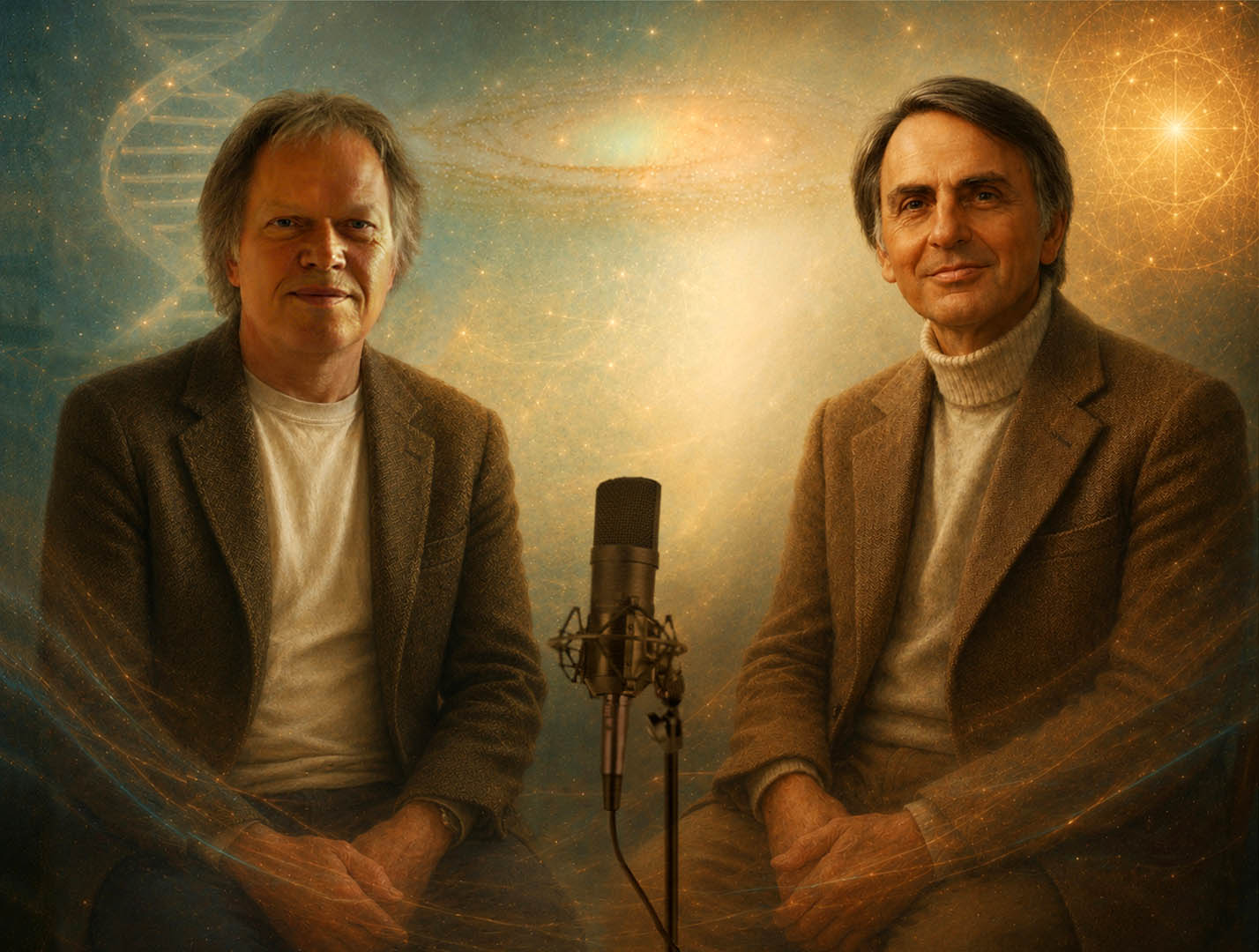
Lynne McTaggart’s ‘tetralogy’
For decades, pioneering scientists and philosophers have been trying to build a bridge between hard science and spiritual mysticism, a quest that takes place in the fields of quantum physics and neuroscience. Although contemporary physicists now accept the phenomenon of non-locality as a fact within the quantum world, they believe that this counter-intuitive property of the subatomic world does not apply to anything larger than an atom. In ordinary reality, therefore, everything would still behave according to Newton’s predictable and measurable laws. Many experiments have, however, since proven them wrong.
In 1975, physicist Fritjof Capra published his influential book The Tao of Physics, in which fascinating parallels were described between modern quantum mechanics and Eastern traditions such as Taoism, Buddhism and Hinduism, with both worlds describing reality as a dynamic, indivisible and interconnected whole.
During the same period, quantum physicist David Bohm and the Indian philosopher Jiddu Krishnamurti engaged in profound conversations for many years, directly linking the structure of the cosmos to human consciousness. David Bohm spoke in this context about the concept of the implicate order, a deeper, implicit order in which everything in the universe is inextricably intertwined.
At the same time, modern neurotheology, with pioneers such as Andrew Newberg, introduced a scientific perspective on the inner world by scanning the brains of praying and meditating monks, demonstrating that profound mystical experiences are accompanied by measurable biological changes (for example: the disappearance of activity in the brain regions that regulate our sense of self and our perception of time).
Science philosopher Ervin Laszlo developed the all-encompassing theory discussed in the interview above, through a reintroduction of the Akasha Field, a cosmic information field in the zero-point vacuum that connects modern cosmology with the ancient Vedic premise that all knowledge and experiences are universally stored.
Ultimately, all these attempts encountered a fundamental clash between two worldviews: the modern-traditional materialism of mainstream science, which holds that physical matter is the basis of everything and that consciousness is merely a by-product of our brains, versus the post-materialism of pioneers such as the American investigative journalist Lynne McTaggart, who assume that consciousness is in fact the fundamental building block of reality from which matter emerges. Because the established order strictly adheres to that materialistic model, pioneering paradigms are often labelled pseudoscience in advance, simply because mainstream science fears losing its credibility to phenomena that it cannot yet explain within its own strict rules.
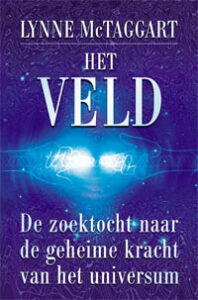
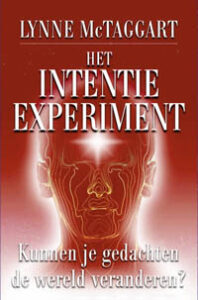
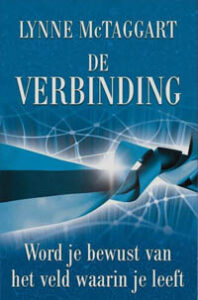
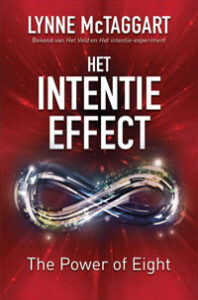
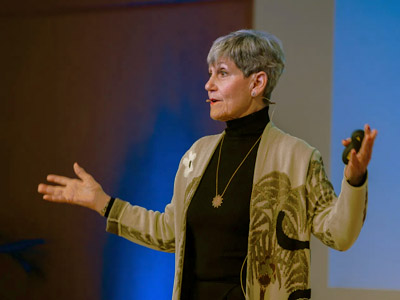 Lynne McTaggart brought together hundreds of scientific studies in her books The Field, The Intention Experiment and The Bond. In The Power of Eight, she writes about what the intention experiments have produced. These four books demonstrate that serious researchers and scientists have not abandoned the question of the nature of the Akasha Field and the influence of human intention. These insights represent a remarkably broad journey of discovery:
how both individual and collective intentions can bring about our interconnectedness, social progress and, ultimately, even lasting non-violent peace.
These four books are absolutely recommended. After reading them, your perception of reality will have changed completely!